

#6 Nailing comms strategy for healthtech scale-ups
Advice from an ex-Kry Global Comms Director

PR is a skill you can’t learn from books or training programmes alone. The most valuable lessons come from experience, and from conversations with colleagues and journalists. That’s why I make a point of speaking to as many PRs I admire as possible, as often as possible! This month I wanted to share one of those conversations with you for inspiration and food for thought.
I recently sat down with Kate Kelham, communications strategist and founder of Kelham Communications Studio, who has navigated the high-stakes worlds of both Fortune 500 engineering giants and fast-scaling global healthtech startups including Kry and Tandem. We discussed the evolving role of the comms professional in an era of tightened budgets and AI-driven noise, how healthtechs can nail their messaging around AI, and advice for comms leaders looking to secure that all-important seat at the top table. Here are *just some* of the points and her words of advice that particularly stuck with me.
1. Healthtech’s complexity shapes the work
We discussed why the first step towards building an effective comms strategy for an early‑stage healthtech company is to understand the full sweep of stakeholders. Kate explained the importance of identifying the different motivations and pain-points for all these groups. At Kry (a digital GP video consultation platform), this included NHS partners, private insurers, patients, commercial clients, and internal teams - each with its own decision cycles, risk thresholds and language.
“Everyone wants something different,” she told me. For comms, the challenge is to create a narrative that can stretch across audiences without losing coherence. Regulatory demands add further constraints, and the landscape shifts constantly, but strong comms functions treat this complexity as the design parameter rather than an obstacle.
2. Startups need comms that can sprint - and still see the horizon
Founders live in the urgency of the present day. Plans change quickly, launches slip, and priorities evolve overnight. Kate’s response to that environment is a comms planning model that delivers quick wins while preserving a longer‑term direction.
My own experience of being embedded in startup life means I can attest that twelve‑month plans rarely survive even a quarter! And yet - the organisation still needs someone to keep an eye fixed firmly on managing the wider arc of the story. Effective comms leaders take both of these responsibilities seriously: they stay close to the immediate needs of founders, but they’re also thinking constantly about narrative consistency, and where the organisation wants to move next. That’s the combination that allows you to work reactively whilst staying strategic.

3. Founders want evidence of progress that matters to the bottom line
When runways are short, C-suite teams want to see clear justification for every comms investment. This can feel stifling for PRs who aren’t used to translating metrics like trust, share of voice and sentiment into ‘founder friendly’ language, and Kate advised that the most productive starting point for PRs in this position is to understand what the leadership team hopes to change - in behaviour, perception or decisions.
She explained how at Kry, once the business matured into a healthcare provider, the comms goals shifted. The focus became influencing NHS stakeholders, strengthening credibility, supporting commercial partnerships, and enabling the product to land in the right environments. Media coverage became the supporting detail, not the headline metric.
Kate also reiterated the importance for comms teams in early stage healthtechs to work closely with growth, product and commercial leads - embedding comms activity and consistent messaging at every stage of the pipeline and customer success programme. When the comms function is connected to the revenue engine, founders can join the dots and see the value far earlier! This is how you unlock more trust and independence alongside more budget.

4. AI projects tend to fall down at the communication stage
We’ve all heard the proclamation that “every business is an AI business now”. But this shift is bringing a big comms challenge that’s stalling adoption. Leadership teams make decisions at speed and set ambitious AI agendas, yet the people in the company receive little context or practical guidance on how to use the tools safely or meaningfully. As a result, the work stalls, confusion spreads, and fear narratives fill the vacuum.
Kate’s advice on managing this comms challenge is to define and communicate around the problem first, then explain exactly how AI can address it, and then provide teams with clear boundaries, processes and support around the tool itself. The outcome is adoption based on understanding and self-motivation, meaning it’s much more likely to stick!
5. Global growth depends on local grounding and a diverse visibility strategy
Geographic expansion always brings a comms dilemma - do you try to manage international PR centrally from HQ, or take the risk of sub-contracting with local partners? Kate’s view is that companies expanding into new markets need some form of local expertise — whether through freelancers or agencies. Local language, regulatory nuance, media conventions and health system structures matter too much to ignore.
The most productive model is a partnership: global teams set the frameworks, tone and priorities; local teams adapt, translate and surface opportunities. Strong communication runs both ways, and the best stories often originate closer to the ground.
At the same time, shrinking newsrooms and limited editorial resources are making media coverage is harder to secure at both the national and the global level. It’s important to design any global comms toolkit with this in mind.
For Kate, the question is simple: where are your stakeholders actually paying attention? If the answer includes micro‑influencers, self‑publishing platforms or specialist communities, then they deserve a place in the strategy.
Why this moment matters for comms people
Kate and I agreed that the communications industry is entering a defining period. AI is reshaping the information environment. Misinformation travels faster and embeds deeper. Stakeholders expect clarity, consistency and honesty. Teams move quicker, markets shift faster, and narratives slip out of the hands of organisations that don’t manage them actively.
The traditional split between internal and external comms no longer reflects how information moves. Kate expects the next phase of comms maturity to involve integrated teams that shape a single narrative, tailored for different environments but consistent in intent and clarity. In this phase, comms becomes the connective tissue: across functions, products, markets and expectations, and for healthtech companies, this means comms’ seat at the top table must be locked in.
What a note to end on! Huge thanks to Kate for the discussion.
PR Inspo
I first saw this campaign as a Tube platform advert and it made such a strong impression on me I was thinking about it all day!

Peanut, the community app for mums, and Tommee-Tippee, the baby product brand, have partnered to launch a campaign calling for the term matrescence to be added to the dictionary.
Peanut’s suggested definition of matrescence is: “1. The physical, psychological, emotional and social process of becoming a mother. 2. The most profound neurological reorganization of the adult human brain observed to date.”
I’ll be watching how this campaign evolves and hoping it succeeds in shining a light on the neurological impact of motherhood and the need for improved post-natal mental health support.
Tommee-Tippee appointed The Romans to a global PR brief back in October, so I’m going to assume this was a Romans-led project 👏
It’s been a busy month of launches in the health comms world. ICYMI:
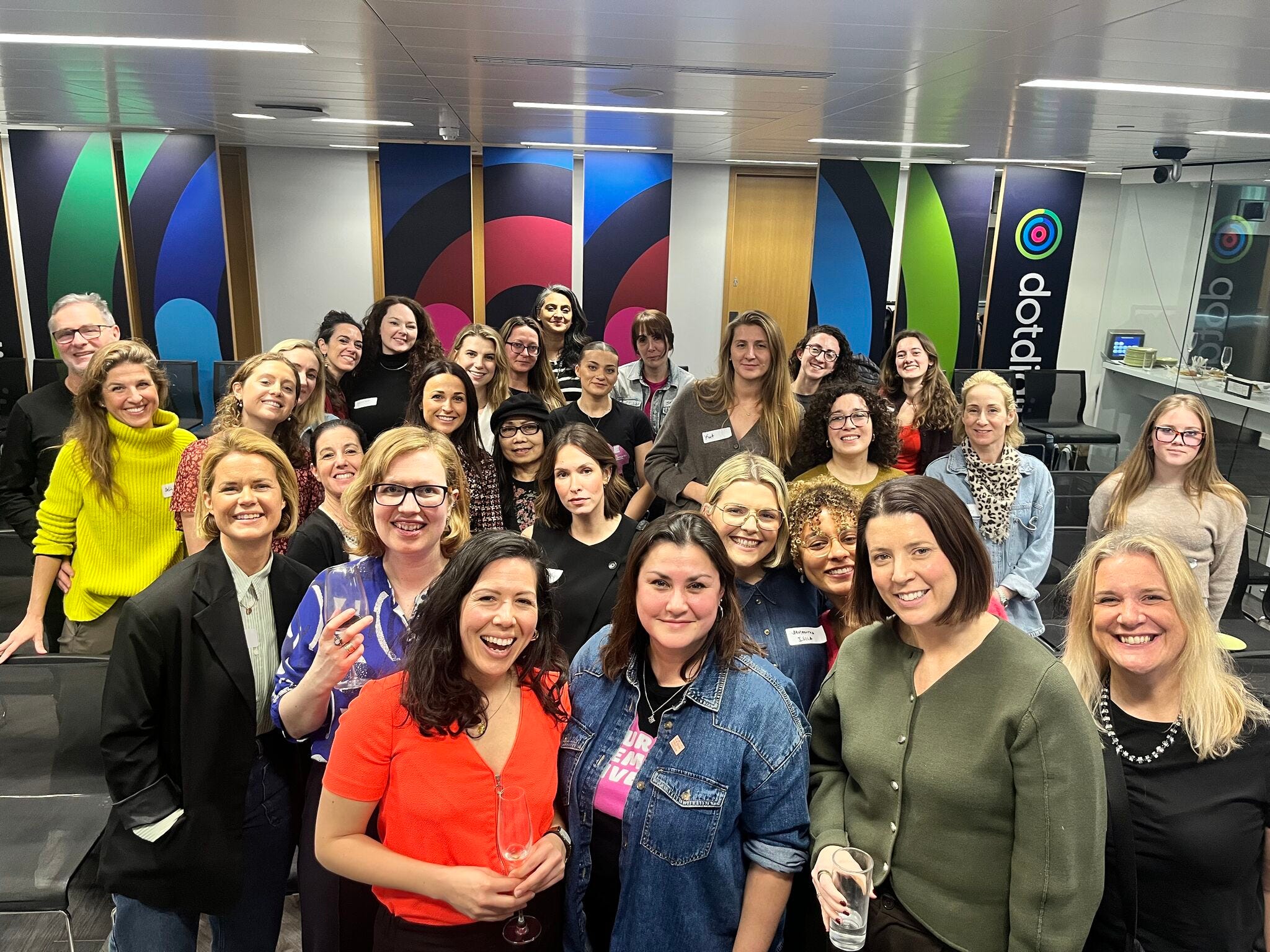
I went to a brilliant panel discussion organised by The Women’s Domain, featuring CensHERship’s Anna O Sullivan and Clio Wood sharing the findings of their new whitepaper: The Bias Burden: why women’s health businesses struggle to access financial services. This work is an evolution of their brilliant campaigning to expose hidden censorship of femtech and women’s health and the huge impact this has.
Talking Taboos Foundation, a charity with a mission to unearth health and social taboo topics whose unspoken nature isolates and prevents people from seeking help, have released their Today’s Taboos 2026 Report. A very important read for communicators.
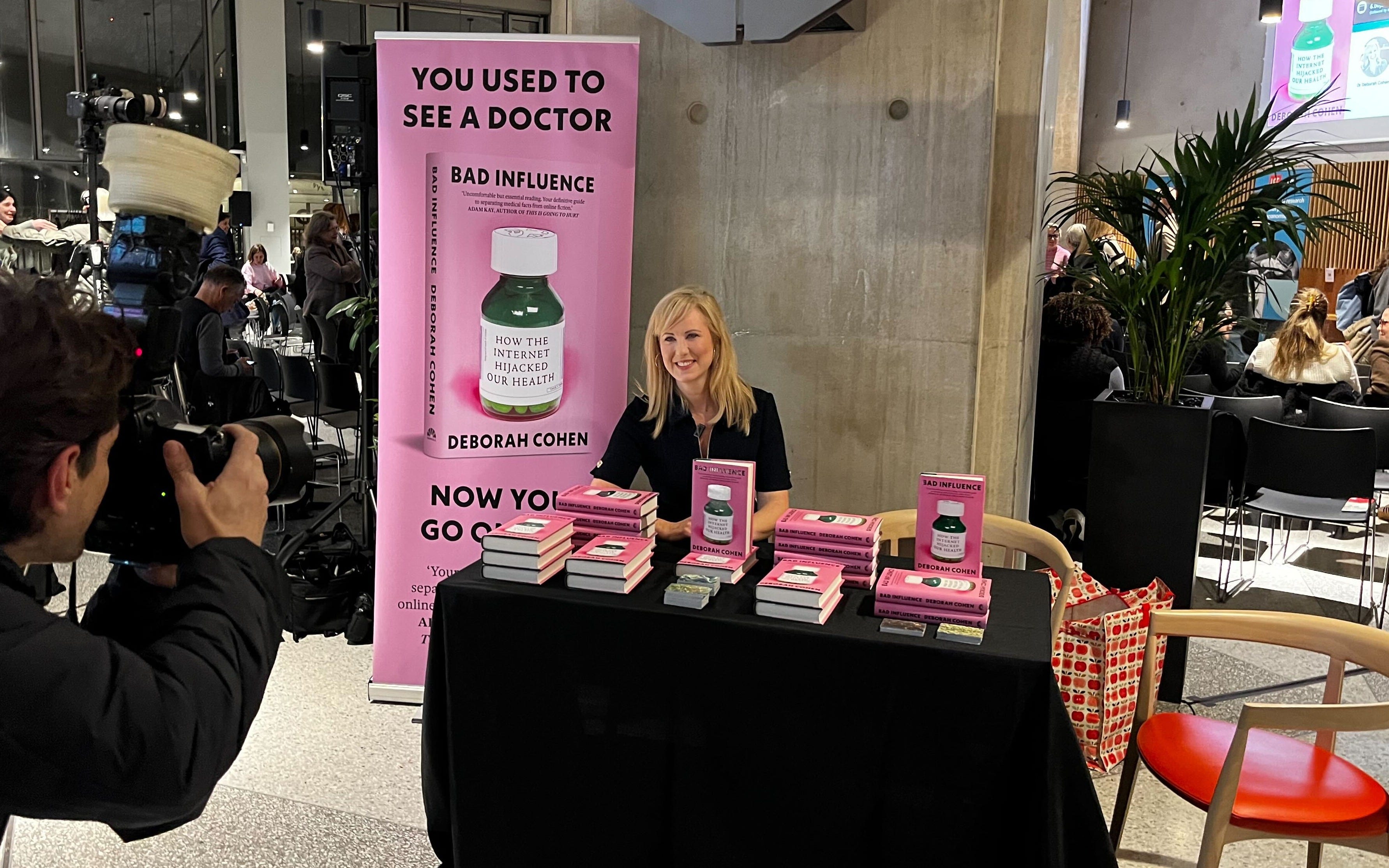
I attended a packed event at LSE to hear the incredible Deborah Cohen being interviewed to mark the launch of her new book, Bad Influence, and about the big, complicated questions that have emerged in parallel to the rise of the social media ‘health influencer’, the new landscape of health information, and new hierarchies of trust.
Dates for Your Diary: March
🚺 One HealthTech have a cracking line-up for their International Women’s Day evening event at Hale House on March 5th. RSVP here.
🥯The OHT London Hub are back with another breakfast panel session on March 10th, asking whether at-home diagnostics are empowering or excluding patients by shifting the burden of healthcare responsibility. RSVP here.
💃 I could NOT be more excited to go to Women’s Health Horizons in London this month - the agenda for the one-day conference looks 10/10. Let me know if you’re planning to go too 😊 Tickets still available here.